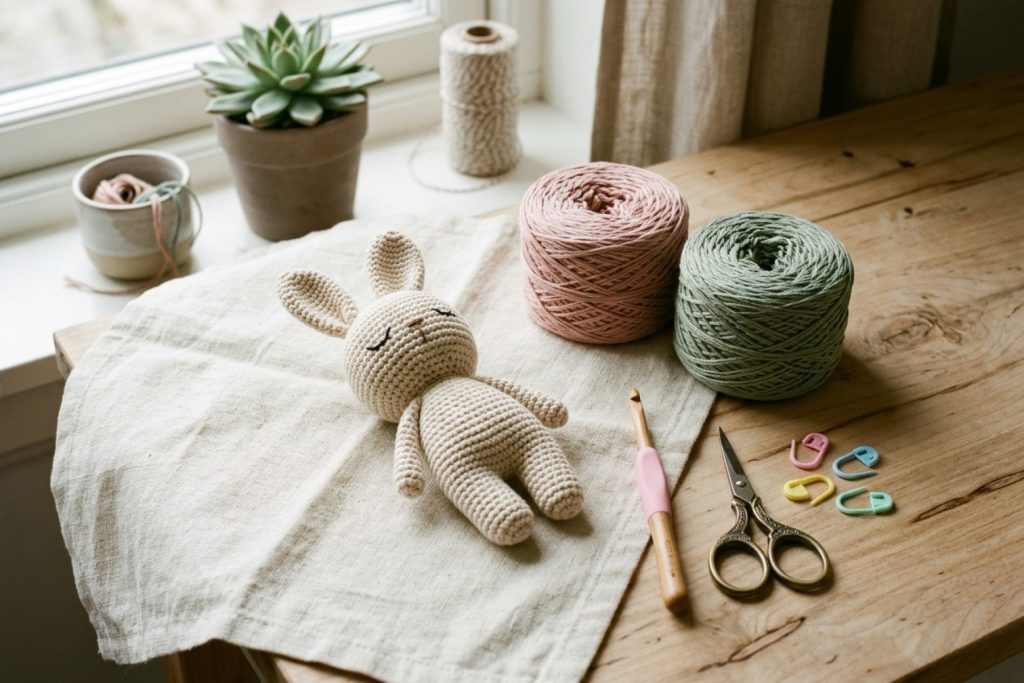
A small project is not always a simple one. Tiny pieces can involve tight spaces, detailed sewing, and many color changes. When choosing a first amigurumi pattern, compare the construction and materials rather than relying only on the size of the finished toy.
Choose one main skill to practice
Think about what you already know and what you want to learn next. A project worked mainly in single crochet may still require increasing, decreasing, counting spiral rounds, and sewing. Read the techniques list and decide which of those steps you are ready to practice.
Choosing one unfamiliar technique at a time can make it easier to identify what is causing a problem. If both the stitch method and the yarn are new to you, make a small practice piece before committing to the complete project. Our free crochet circle exercise is one place to practice counting increases.
Look at the number and size of separate pieces
A project with several fingers, ears, accessories, and facial details can take careful assembly even if each individual piece is short. Look for an assembly overview or a clear list of components. Check whether the pattern includes photographs for the steps you are less familiar with.
Terms such as “no sew” or “low sew” should be explained by the individual listing. They do not necessarily mean there are no yarn ends to secure or no finishing steps. Read the full description rather than treating a short label as a complete explanation.
Match the yarn to your current comfort level
A smooth yarn can make stitch shapes easier to identify while you learn to count. Very dark colors, fluffy textures, and some plush yarns can make those shapes harder to see. That does not make them bad materials; it means they may add another challenge to the project.
Use the pattern’s suggested materials as your starting point. If you want to substitute, compare the fiber, thickness, and sample fabric. The yarn and hook guide explains what to check before assuming two yarns will behave alike.
Check the language and stitch terminology
Confirm both the written language and whether the pattern uses US or UK crochet terms. An English-language pattern can use either system. Check for a stitch key, special-stitch notes, and any techniques that rely on a chart or photograph.
If you are shopping for a PDF, check what files are included and whether the pattern is supplied individually or inside a bundle. More pages or more designs do not automatically make a pattern easier to follow. What matters is whether the instructions give you the information you need for that project.
Think through finishing before you start
Read about sewing, shaping, eyes, stuffing, supports, and accessories. Consider the intended use and recipient before choosing components. Decorative projects can contain small parts or wire and should not automatically be treated as suitable for a young child.
Keep materials and instructions for each part together. A project bag with the pattern name, hook, yarn labels, and a short progress note makes it easier to return to the work. Our finishing checklist helps you plan those final steps.
Read the listing as a purchase decision
Before paying, confirm that you are buying a digital pattern rather than a finished item. Check the language, materials, included files, price, download information, and support route. If an important detail is missing, ask before you buy rather than assuming it is included.
Browse the HeartCrochet pattern collection and compare the details that matter to you. The aim is to choose a project you want to make with instructions and materials you understand, rather than selecting the largest bundle or the most complicated photograph.